

Les Paul 50s Wiring: What It Is, How It Works & Why Use It?
Les Paul 50s wiring is a popular vintage-style guitar wiring configuration designed around the interaction between the volume and tone controls. It is particularly associated with vintage Gibson-style two-humbucker guitars and is now widely used as a modification for Les Pauls and other guitars with separate volume and tone controls.
The defining feature of 50s wiring is where the tone capacitor connects to the volume potentiometer. Instead of connecting the tone circuit to the volume pot's input, as in the commonly used modern wiring arrangement, the capacitor connects to the output/wiper side of the volume control.
This relatively small wiring change affects how the volume and tone controls interact.
One of the main reasons guitarists choose Les Paul 50s wiring is that it can help retain more perceived high-end as the guitar's volume control is rolled back, giving the volume controls a more interactive and responsive character.
What Is Les Paul 50s Wiring?
A typical Les Paul-style circuit has:
- Two pickups
- Two volume controls
- Two tone controls
- Two tone capacitors
- A three-way pickup selector
- An output jack
With 50s wiring, the tone capacitor is connected between the tone control and the output side of the corresponding volume control.
In simple terms, the important change is:
The tone circuit is connected to the volume pot's output rather than its input.
This changes the electrical relationship between the pickup, volume control and tone circuit.
Les Paul 50s Wiring Diagram
The easiest way to understand 50s wiring is to look at where the tone capacitor connects.
In a conventional Les Paul-style 50s wiring arrangement:
Pickup → Volume Pot → Output
The tone capacitor connects from the volume pot output/wiper to the tone circuit.
This is different from modern wiring, where the tone capacitor is connected to the volume pot's input side.
Important wiring detail
The volume pot is normally viewed from the back when following many Les Paul wiring diagrams.
This can make wiring diagrams confusing because the physical orientation of the potentiometer changes how the terminals appear.
Always follow the specific wiring diagram for the potentiometers and components you're installing rather than assuming that the left and right lugs are interchangeable.
How Does 50s Wiring Work?
To understand why 50s wiring behaves differently, it helps to look at what happens when you turn down the guitar's volume.
With a conventional modern-style wiring arrangement, the tone circuit is connected to the input side of the volume control.
As the volume is reduced, the interaction between the volume control, tone circuit and the guitar cable can result in a greater reduction in high-frequency content.
With 50s wiring, moving the tone circuit to the output side of the volume control changes this interaction.
The result is that more high-frequency content can be retained as the volume control is rolled back.
This is one of the main reasons players use 50s wiring.
What Does 50s Wiring Do to a Les Paul?
The most commonly reported characteristics of Les Paul 50s wiring are:
- Better perceived treble retention when rolling back volume
- More interaction between the volume and tone controls
- A more pronounced effect from the tone control
- A different feel to the volume control
- Useful clean-up from the guitar's volume control
- A responsive, interactive control layout
However, 50s wiring isn't simply a universal "treble retention mod."
The exact result depends on the guitar's pickups, potentiometer values, capacitor values, cable capacitance and the settings of the controls.
The wiring changes the electrical relationship between the controls; it doesn't add treble to the pickup itself.
Does 50s Wiring Make a Les Paul Brighter?
It can make a Les Paul sound brighter when the volume is turned down, because the wiring can reduce some of the high-frequency loss associated with reducing the volume.
This is particularly noticeable when using the guitar volume control to move between a driven and cleaner sound.
With the volume at maximum, the audible difference between 50s and modern wiring can be relatively subtle depending on the rest of the circuit.
The difference generally becomes more apparent as the volume and tone controls are adjusted.
Why Do Guitarists Use 50s Wiring?
One of the main attractions of 50s wiring is the way it allows the guitar's volume control to become part of the player's tone-shaping system.
Instead of treating the volume knob simply as an output-level control, you can use it to move between different levels of gain and brightness.
For example:
- Volume 10: Full pickup output and maximum drive.
- Volume 7–8: Reduced output with a potentially cleaner, more open sound.
- Volume 4–6: Useful for lower-gain rhythm sounds and dynamic playing.
The exact response depends heavily on the guitar and amplifier.
This makes 50s wiring particularly attractive to players who control amp gain from the guitar rather than leaving the guitar volume permanently on 10.
50s Wiring and Overdriven Amps
One of the reasons 50s wiring is popular among players using valve or tube amplifiers is the way the guitar volume control can be used to clean up an overdriven sound.
You can set the amplifier for the desired amount of drive with the guitar volume high, then reduce the guitar's volume to produce a cleaner sound.
If the guitar retains more high-frequency content as the volume is reduced, the resulting clean tone can feel more open and articulate.
This doesn't mean 50s wiring is specifically an "overdrive circuit." It's simply a wiring arrangement that changes the relationship between the guitar's volume and tone controls.
50s Wiring and the Tone Control
There is an important trade-off to understand.
The interaction between the volume and tone controls means that adjusting the tone control can influence the behaviour of the volume control, and vice versa.
Some players love this interactive behaviour.
Others prefer the more predictable independence of modern wiring.
This is one reason there isn't a universally "correct" Les Paul wiring configuration.
There is a detailed comparison of the different approaches in our 50s Wiring vs 60s/Modern Wiring guide.
What Capacitor Should You Use With Les Paul 50s Wiring?
A 0.022 µF capacitor is a common value for Les Paul-style guitar tone circuits.
Other values can also be used to alter the response of the tone control.
- 0.022 µF — common general-purpose Les Paul value
- 0.015 µF — can provide a less aggressive high-frequency roll-off
- 0.047 µF — produces a broader/deeper tone roll-off
The capacitor value doesn't determine whether wiring is "50s wiring."
The important distinction is where the capacitor is connected.
What Pots Should You Use for 50s Wiring?
Potentiometer value has a significant influence on the overall electrical loading of passive guitar pickups.
Common Les Paul-style values include:
- 500K volume pots
- 500K tone pots
Higher resistance values generally place less load on the pickup and can allow more high-frequency content through.
This means that choosing suitable potentiometers is important when building or upgrading a Les Paul wiring harness.
Pot tolerance also matters. A nominal 500K pot can measure somewhat above or below 500K, so two guitars fitted with nominally identical components can still sound somewhat different.
50s Wiring vs Modern Wiring
50s wiring and modern wiring use the same basic guitar controls but connect the tone circuit differently.
50s wiring
The tone capacitor connects to the output/wiper side of the volume control.
This generally produces:
- Greater treble retention as volume is reduced
- More interaction between volume and tone controls
- A different volume-control response
Modern wiring
The tone circuit connects to the input side of the volume control.
This generally produces:
- More consistent interaction between volume and tone
- Less control interaction
- Potentially greater high-frequency loss as the volume is reduced
For a detailed side-by-side comparison, see our 50s Wiring vs 60s/Modern Wiring guide.
Is 50s Wiring Actually Vintage Les Paul Wiring?
This is worth clarifying because the term "50s wiring" can be misleading.
The name is commonly used to describe the vintage-style wiring arrangement where the tone capacitor is connected to the volume pot's output.
However, not every Les Paul made during the 1950s necessarily used an identical circuit.
The wiring used by Gibson evolved over time, and different guitars can have different component choices and wiring details.
The term "50s wiring" is therefore best understood as the name of a particular wiring configuration rather than a guarantee that every original 1950s Les Paul was wired identically.
Is 50s Wiring the Same as Vintage Wiring?
Not necessarily.
"Vintage wiring" can refer broadly to an attempt to reproduce the wiring and components found on historical guitars.
"50s wiring" specifically describes the connection between the tone capacitor and volume control.
A guitar can therefore have:
- 50s wiring with modern components
- 50s wiring with vintage-style components
- Modern wiring with vintage-style components
- Other modified wiring configurations
The wiring topology and component selection are separate decisions.
Can You Put 50s Wiring in Any Les Paul?
50s wiring is particularly straightforward on guitars using the familiar:
2 humbuckers + 2 volume + 2 tone + 3-way switch
This includes many:
- Gibson Les Paul models
- Epiphone Les Paul models
- Les Paul-style guitars
- SG-style guitars
- ES-style two-pickup guitars
- Other two-volume/two-tone instruments
However, the exact wiring depends on the guitar's existing electronics and pickup configuration.
If the guitar has push-pull pots, coil splits, phase switching or other modifications, the wiring diagram may be considerably more complicated.
Can You Add 50s Wiring to a Les Paul?
Yes.
For a conventional two-pickup Les Paul-style circuit, converting from modern wiring to 50s wiring involves changing the connection between each tone capacitor and its corresponding volume control.
This is one reason 50s wiring is such a popular modification.
However, take care when working inside a Les Paul. The control cavity can be deep and access to the components can be awkward. Potentiometers, switches and pickup wires can also be damaged by excessive heat.
If you're not confident with soldering, having the modification performed by a guitar technician is a sensible option.
Les Paul 50s Wiring Harness
If you want to install 50s wiring without assembling the entire circuit yourself, a pre-wired Les Paul harness can simplify the process.
A quality harness can provide:
- Correctly wired volume controls
- Correctly wired tone controls
- Tone capacitors
- Pickup connections
- Output jack wiring
- Switch connections
- Professionally soldered joints
This can be particularly useful when upgrading an older Les Paul-style guitar or replacing inexpensive factory electronics.
ObsidianWire Les Paul 50s Wiring
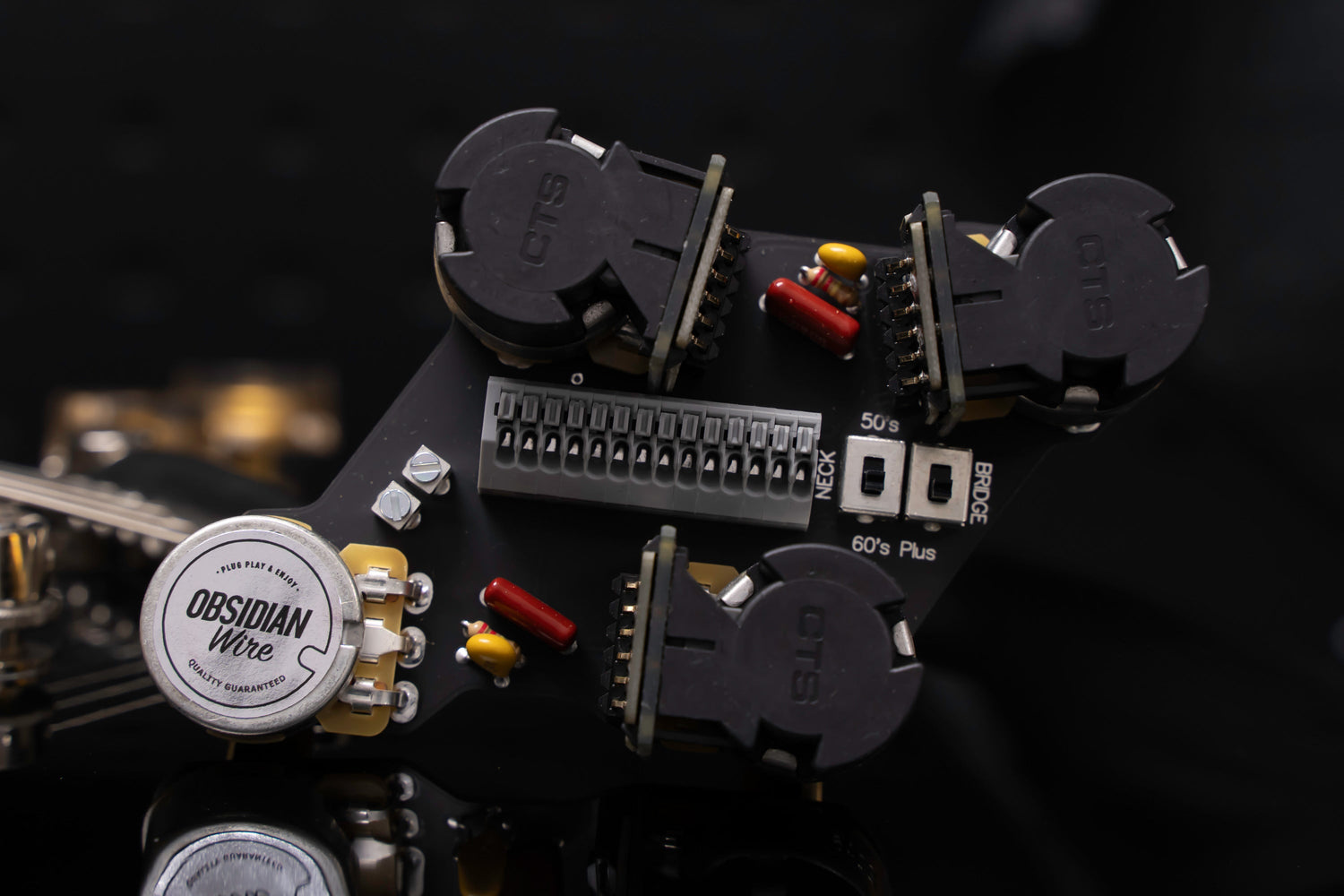
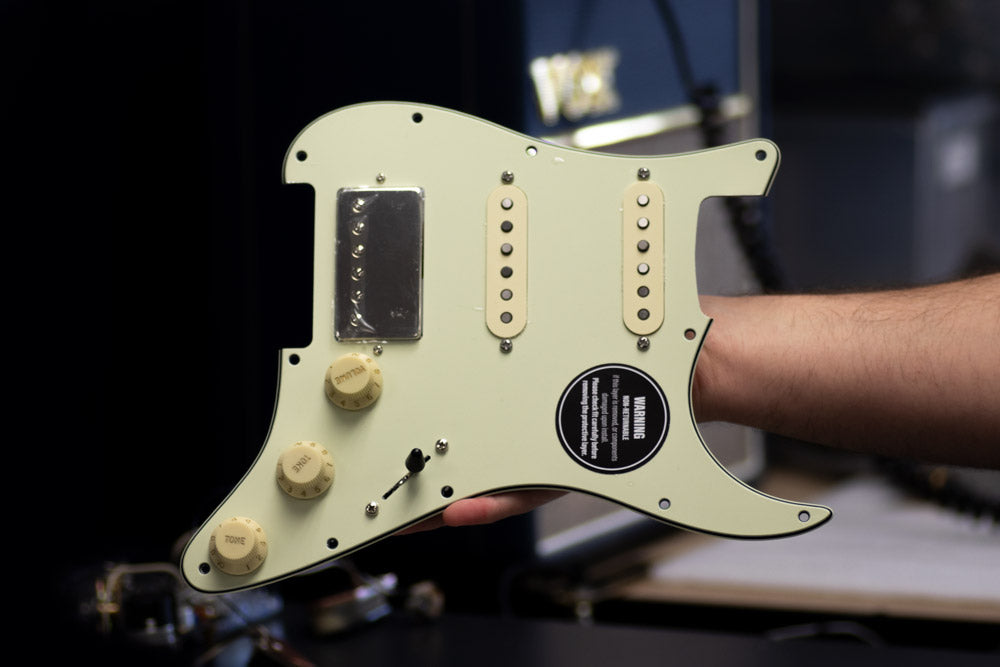
ObsidianWire offers professionally assembled guitar wiring harnesses designed to make upgrading Les Paul-style electronics easier.
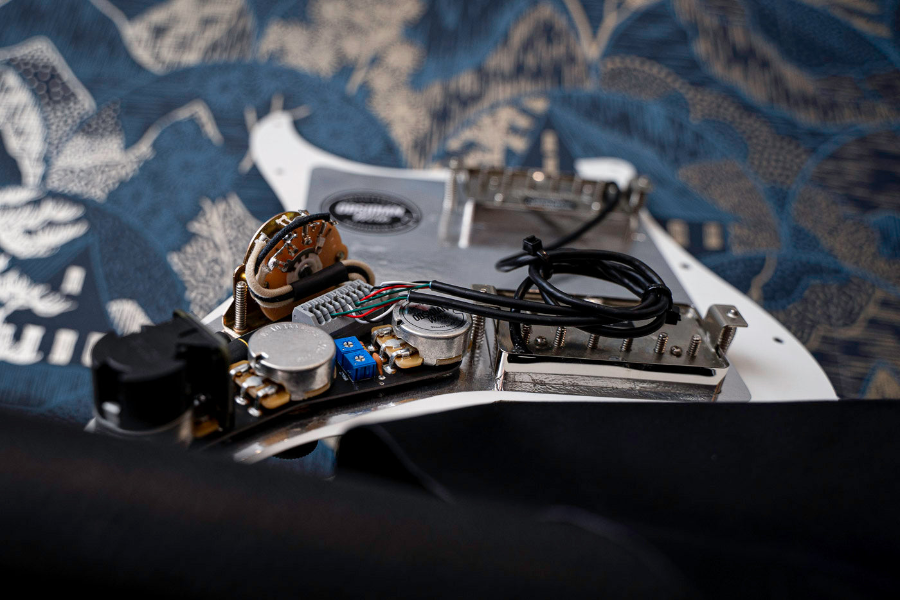
Instead of wiring every potentiometer, capacitor, switch and ground connection individually, a pre-built harness provides the electronics as an assembled system.
For players who want the characteristics of Les Paul 50s wiring without building the entire circuit themselves, this can be a much simpler approach.
The ObsidianWire range also includes solderless options, which can make compatible pickup changes considerably easier in the future.
Explore ObsidianWire Les Paul Wiring →
Les Paul 50s Wiring Without Soldering
Traditional 50s wiring requires soldered connections. However, installing a solderless harness provides another approach to upgrading the guitar.
With a compatible ObsidianWire solderless system, the main electronics are professionally assembled and compatible pickups can be connected using the solderless connector system.
This can be particularly useful if you:
- Change pickups regularly
- Experiment with different humbuckers
- Build or modify several guitars
- Don't want to solder inside the control cavity
- Want easier future pickup changes
- Want a professionally assembled harness
Explore ObsidianWire Solderless Guitar Wiring →
Why Use a Solderless Les Paul Harness?
Traditional guitar wiring gives you maximum flexibility. You can change the circuit, add switches and modify the electronics however you want.
But every modification means opening the guitar and potentially soldering and desoldering components.
A solderless system takes a different approach.
The harness is assembled beforehand, while compatible pickup connections can be made without repeatedly soldering the pickup wires.
This can be especially useful for players who treat their Les Paul as a platform for experimenting with different pickups.
50s Wiring and Pickup Changes
Changing pickups on a traditionally wired Les Paul normally involves soldering.
You need to:
- Remove the control cavity cover.
- Identify the pickup connections.
- Desolder the existing pickup.
- Remove the old pickup.
- Install the new pickup.
- Connect the new pickup wires.
- Solder the connections.
- Test the guitar.
- Troubleshoot if necessary.
A solderless harness changes this workflow.
Once a compatible solderless harness is installed, compatible pickups can be disconnected and connected without repeatedly soldering inside the guitar.
That makes a solderless 50s-style wiring harness particularly interesting for players who frequently experiment with pickups.
Does 50s Wiring Change Pickup Tone?
50s wiring doesn't change the fundamental construction of the pickup.
The pickup remains the same.
What changes is the way the pickup interacts with the volume and tone controls.
This can alter the guitar's response when you:
- Roll down the volume
- Roll down the tone
- Blend the two pickups
- Change amplifier gain
- Adjust the guitar's controls dynamically
The effect is therefore best thought of as a change in control behaviour and electrical loading, rather than a change to the pickup itself.
Does 50s Wiring Reduce Treble Loss?
This is one of the main reasons players choose it.
Compared with a conventional modern wiring arrangement, 50s wiring can help retain more high-frequency content when the volume control is turned down.
The difference is especially noticeable when using the volume control as a dynamic gain control.
However, the exact amount of difference depends on the rest of the guitar circuit.
Pickup inductance, pot resistance, capacitor value, cable capacitance and control settings all contribute to the resulting response.
Does 50s Wiring Affect Volume and Tone Interaction?
Yes.
This is one of the defining characteristics of the circuit.
Because the tone circuit is connected to the output side of the volume pot, changing the volume and tone controls affects their interaction.
Some players find this gives them more expressive control.
Others prefer modern wiring because the controls behave more independently.
Neither approach is inherently better for every player.
The important question is which response you prefer from the guitar's controls.
Is 50s Wiring Good for Humbuckers?
50s wiring is particularly common with two-humbucker guitars because of the way the volume controls can be used to manage gain and brightness.
It can be especially useful with:
- PAF-style humbuckers
- Alnico humbuckers
- Vintage-output pickups
- Higher-output humbuckers
- Les Paul-style guitars
The result will vary with the pickup and amplifier.
Is 50s Wiring Good for High-Gain Players?
It can be useful for players who use their guitar's volume controls to manage gain.
For example, you might set the amplifier for a saturated rhythm or lead tone with the guitar volume at 10, then roll the volume down to clean up the signal.
Because 50s wiring can preserve more high-frequency content during this volume reduction, the resulting cleaner sound can remain relatively articulate.
However, players who prefer a more consistent tone as they reduce volume may prefer another wiring configuration.
Les Paul 50s Wiring: Key Points
- 50s wiring refers primarily to the tone capacitor's connection to the volume pot.
- The capacitor connects to the output/wiper side of the volume control.
- It can provide greater treble retention when rolling down the volume.
- The volume and tone controls interact more strongly.
- A common Les Paul tone capacitor value is 0.022 µF.
- 500K pots are commonly used in Les Paul-style circuits.
- The wiring can be used with many two-volume/two-tone guitars.
- The exact result depends on the entire guitar circuit.
- 50s wiring doesn't change the pickup itself.
- A professionally assembled harness can simplify installation.
- A solderless harness can make compatible future pickup changes easier.
Frequently Asked Questions
What is 50s wiring on a Les Paul?
Les Paul 50s wiring is a vintage-style wiring configuration in which the tone capacitor connects to the output/wiper side of the volume potentiometer rather than the input side.
What does 50s wiring do?
It changes the interaction between the volume and tone controls and can help retain more high-frequency content when the guitar volume is rolled back.
Does 50s wiring make a Les Paul brighter?
It can make the guitar retain more perceived treble as the volume is reduced. The effect is less about making the pickup inherently brighter and more about reducing some of the high-frequency loss associated with turning down the volume.
What capacitor is used for 50s wiring?
A 0.022 µF capacitor is a common choice for Les Paul-style guitar wiring. Other values can be used to change the range of the tone control.
Do you need special pots for 50s wiring?
No. 50s wiring can be implemented using standard guitar potentiometers. 500K pots are common in Les Paul-style humbucker circuits.
Can I convert my Les Paul to 50s wiring?
Yes. A conventional two-volume/two-tone Les Paul-style circuit can generally be converted to 50s wiring by changing the connection of the tone capacitor to the output side of the volume pot.
Is 50s wiring better than modern wiring?
50s and modern wiring produce different control behaviour. 50s wiring generally provides greater treble retention as volume is reduced but also creates more interaction between the volume and tone controls.
Is 50s wiring the same as vintage Gibson wiring?
Not necessarily. "50s wiring" is a commonly used description of a particular wiring configuration. Historical Gibson guitars did not necessarily all use exactly the same wiring or components.
Can I use 50s wiring with PAF pickups?
Yes. 50s wiring is commonly used with PAF-style and other humbucking pickups.
Can I install 50s wiring without soldering?
Traditional 50s wiring is a soldered circuit. However, a compatible pre-assembled solderless harness can provide the same basic wiring approach while making compatible pickup connections solderless.
Can I change pickups without soldering on a Les Paul?
Yes, if the guitar is equipped with a compatible solderless wiring system. ObsidianWire solderless harnesses are designed to allow compatible pickup changes without repeatedly soldering pickup connections.
See ObsidianWire Solderless Guitar Wiring →
Explore Les Paul Wiring Options
Whether you're restoring an older Les Paul, upgrading the electronics in an Epiphone, installing new humbuckers or building a custom guitar, the wiring has a significant effect on how the controls behave.
For players who want the responsive volume control characteristics associated with Les Paul 50s wiring, a correctly assembled harness makes the upgrade straightforward.
And if you expect to change pickups in the future, a solderless Les Paul wiring system can make those upgrades considerably easier.
Shop Les Paul Wiring Harnesses →
Shop Solderless Guitar Wiring →